



Mary Pouline, Author and Founder, Sapience Publications
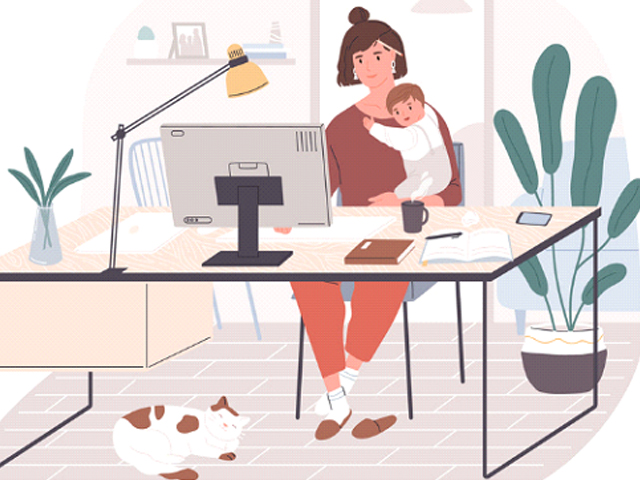
Hello, my dear readers. I am Mary Pouline, back with my monthly parenting insights. Lately, I have been pondering about the conundrum of the modern working mother. She is expected to juggle a hundred tasks all at once. She’s a true professional in the office, but at home, she dons the hat of a chef, a nurse, a teacher, a housekeeper, a nanny, and so much more. Balancing a career and motherhood is like walking a tightrope, but for Indian working mothers, the rope is often thinner, the crowd louder, and the safety net smaller.
India is home to one of the world’s fastest-growing economies, yet women’s workforce participation has remained stubbornly low, hovering around 24% as of 2023, according to the World Bank. Many experts agree that a major reason for this drop is not lack of ambition or talent, but the difficulty of juggling professional responsibilities with parenting in a society still transitioning from traditional norms to modern demands.
Yet, millions of Indian women continue to work, strive, and thrive, often quietly carrying the dual burden of work and home. In this article, I want to explore the unique challenges they face and the pathways that can ease their journey.
The Second Shift: The Invisible Load No One Talks About
A few months ago, I was visiting my friend Ritika in Bengaluru. She is a marketing manager, and works from the office six days a week. I happened to be in her home when she returned after a 9-hour workday. Before she could even remove her heels, her daughter tugged at her kurti asking for a snack, her phone rang incessantly, and a school email pinged asking for a last-minute project submission. Ritika jokingly said, “My workday ends at office, but my shift as a mother starts during my commute.”
Sociologists call this the “second shift”—the unpaid work that women perform at home. In India, this shift is enormous. A 2019 report by the National Sample Survey Office showed that Indian women spend 4.5 hours more on household work daily than men. Even in dual-income households, mothers end up owning the mental load which includes planning meals, remembering vaccination schedules, organising school supplies, coordinating with house help, managing relatives’ expectations, and more. This invisible labour compounds stress and burnout, making it harder for women to sustain careers.
Indian Cultural Expectations:
Progress Meets Tradition
While urban India has progressed in ideas around gender equality, cultural expectations still weigh heavily on mothers. Many women grow up with rigid gender roles in place, groomed to take on the responsibility of managing the home.
In joint families, mothers often face conflicting expectations—pursuing career growth while being expected to maintain traditional roles like cooking, managing festivals, caring for elders, or organizing family events. Even with supportive spouses, extended family pressures can build up subtly.
The impact is real: according to an ILO study, almost 50% of Indian women leave the workforce after marriage or childbirth, a rate significantly higher than many Asian countries.
The Guilt Trap: A Constant Emotional Companion
“Am I spending enough time with my child?”
“Is my child eating well?”
“Should I have taken that promotion?”
“What if I miss their childhood moments?”
These questions echo in the minds of working mothers across the country.
Psychologists call this maternal guilt, and it is amplified in cultures where motherhood is idealised as a full-time, self-sacrificing role. A 2021 survey by LinkedIn India found that 83% of working mothers felt guilty about balancing work and home.
Childcare Challenges in India: Costly, Limited, and Uneven Reliable childcare is one of the biggest barriers for Indian working moms.